
Three nations · Nine generations · One voice
Roots
In Buganda you are never only yourself. To introduce yourself, you must name your father, his father, your clan, its totem, its motto, identity spoken aloud as genealogy. This is that introduction, made in full.
House I · Buganda, Uganda
Ennyonyi ya Nseenene
The clan of the grasshopper
The Nseenene take the grasshopper as their totem, not only a sign but a season. Twice a year, when the rains come, the swarms rise over Buganda and are gathered: a delicacy, a harvest, a small green promise of abundance. To this clan you do not eat your own totem. You honour it.
The clan remembers its beginning as a migration. Kiroboozi, a herdsman on the slopes of Mugamba Hill, had three children who drove their cattle down through Bwera into Ggomba: Buyonga, Kalibbala, and their sister, Nnandawula. A woman remembered by name in a line that counts itself through fathers. Her name did not end. It was carried, and carried, and given again, until it arrived here, spelled the way I spell it.
Through Buyonga's daughter Wannyana, mother of Kabaka Kimera, the third king of Buganda, the clan is woven into the founding of a throne, which is why our praise still calls on Nakimera, of Kimera. And the name I carry, Kagwa, is the name of Sir Apolo Kagwa, Katikkiro of Buganda for thirty-six years, regent to a child-king, and the first man to write our history down so it could not be lost. The colossus of Buganda.
Omubala · the clan motto
“Ggwe mpagi, ggwe luwaga;
Nakimera muka Ssuuna.”
“You are the pillar, you are the support-beam.” The ones who hold the house up.
- Totem
- Nseenene · the grasshopper
- Clan head
- Mugalula
- Seats
- Kisozi · Lweza, Busujju
And in our own telling: I come from the line of Kabombola, who reigns from Kyakasuku; from Segoma in Kayenje. Names the internet does not keep, only the family does.


House II · amaXhosa, South Africa
AmaTshawe
The founding royal house
Every Xhosa king traces back to one ancestor: Tshawe. And the way he came to the throne is the part I love. He was not the eldest, not the Great House heir: he was the junior son. When their father died, his brothers Cirha and Jwarha held the senior claims. Tshawe took warriors, met them in the field, and won the kingship, then held it for his line forever. The oldest royal house in South Africa begins with a younger child who refused to be minor.
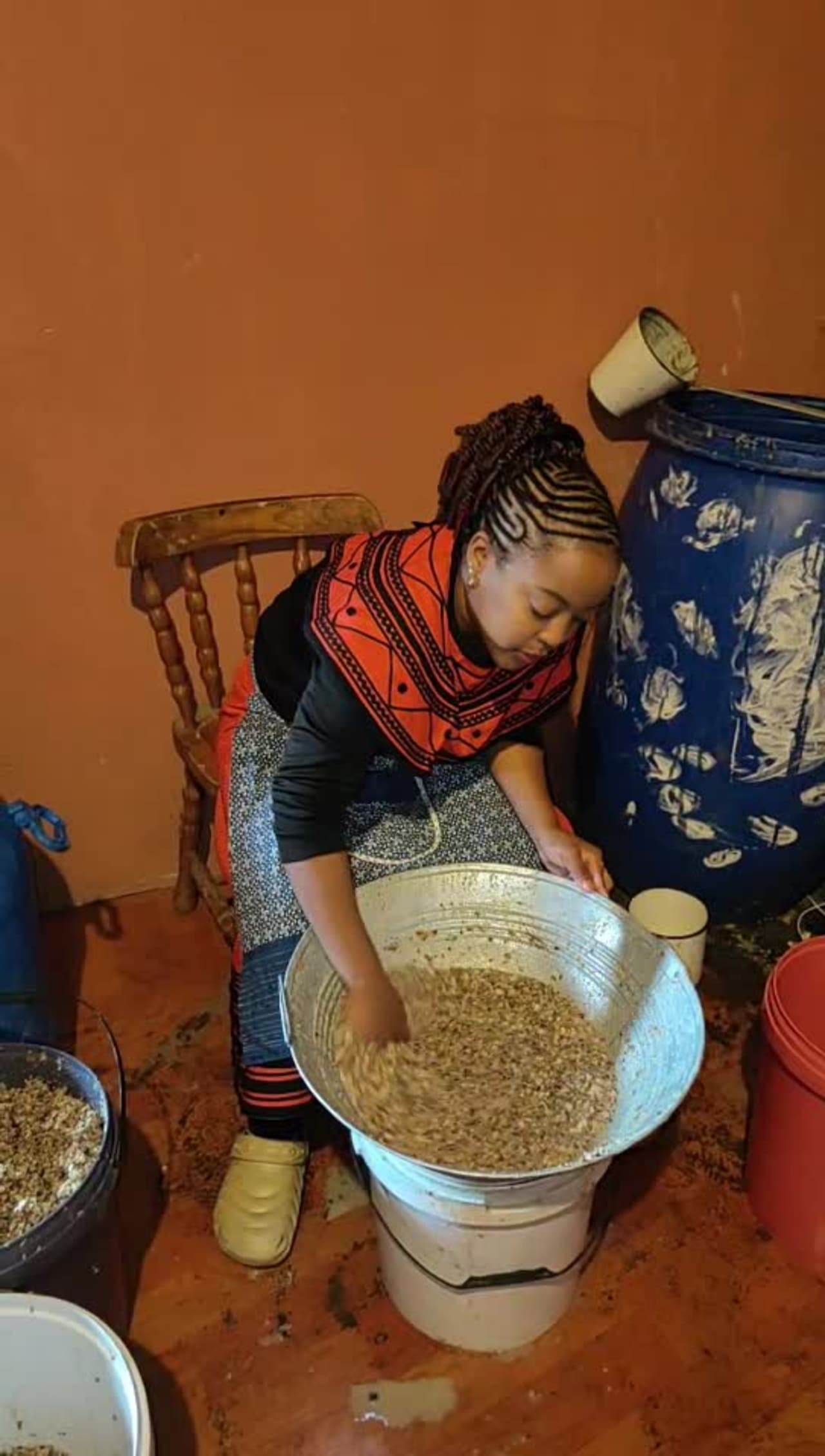
This house keeps its memory two ways. The isiduko, the clan name, passes from father to child and matters more than any surname; to know a person's isiduko is to know their ancestors and be able to praise them. And the imbongi, the praise-poet, walks beside the chief and recites the deeds of the house out loud. History, kept as performed poetry.
I was born into a nation that appoints a poet to remember the family, and then I became one.


House III · amaHlubi, South Africa
KwaMsimanga
The scattered kingdom
The Msimanga are amaHlubi, an Nguni people old enough to count kings back to the 1300s, down to Langalibalele. Then, around 1818, the Mfecane, the great scattering. The Hlubi kingdom was shattered; its people fled north, west, into other nations, into refuge. That is why a Msimanga can be found today in South Africa, Botswana, Lesotho, Zimbabwe. The spread of the clan across four countries is a fingerprint of that flight, and my own life across nations is the same story, still moving.
Its praises are real, and they are poetry: the one who descends in a grain-basket while commoners come down on foot, an image of rank folded into a single line, spoken to greet and to honour.
Izithakazelo · the clan praises
Thabizolo, Nonkosi, Mlotshwa,
wena owehla ngesilulu
abafokazane behla ngezinyawo,
Pembe kaLokothwayo,
Ngelengele!
Praise-names carried, not translated, the way they are meant to be spoken. isiHlubi, the language they belong to, is endangered now; to say them at all is to keep them alive.


And so, the introduction
I am of the grasshopper and the throne of Buganda; of the royal house of Tshawe; of the scattered kingdom of the Hlubi. Three nations gave me their names and their poetry. I am the one they appointed to remember, and I remember in verse.
Nseenene · AmaTshawe · Msimanga · Nine generations documented
Clan histories drawn from the Buganda Kingdom, South African History Online, the Ulwazi Programme, and family record. Verified histories and praise-poetry; the family's own line and names are held as family memory.