Poet · Performer · The poet who codes
Nandawula
Regine
A woman who writes in roses and builds in code, from KuGompo City (formerly East London), out to the world, and always back to where she comes from.
In her own words, more or less
She learned to speak in two tongues, the language of longing, and the language of systems. One she was born into. The other she taught herself, at a modest desk, until the screen answered back.
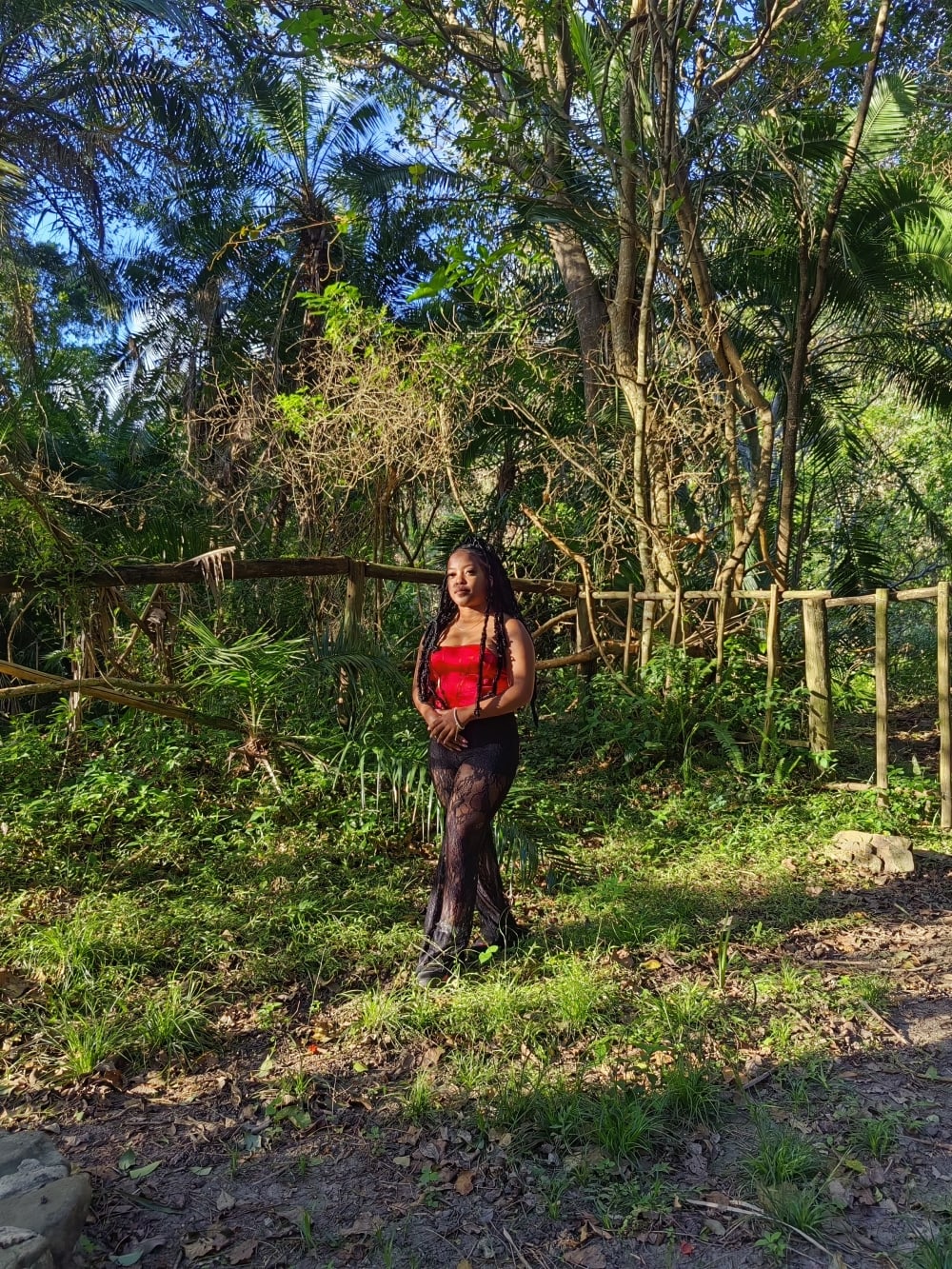
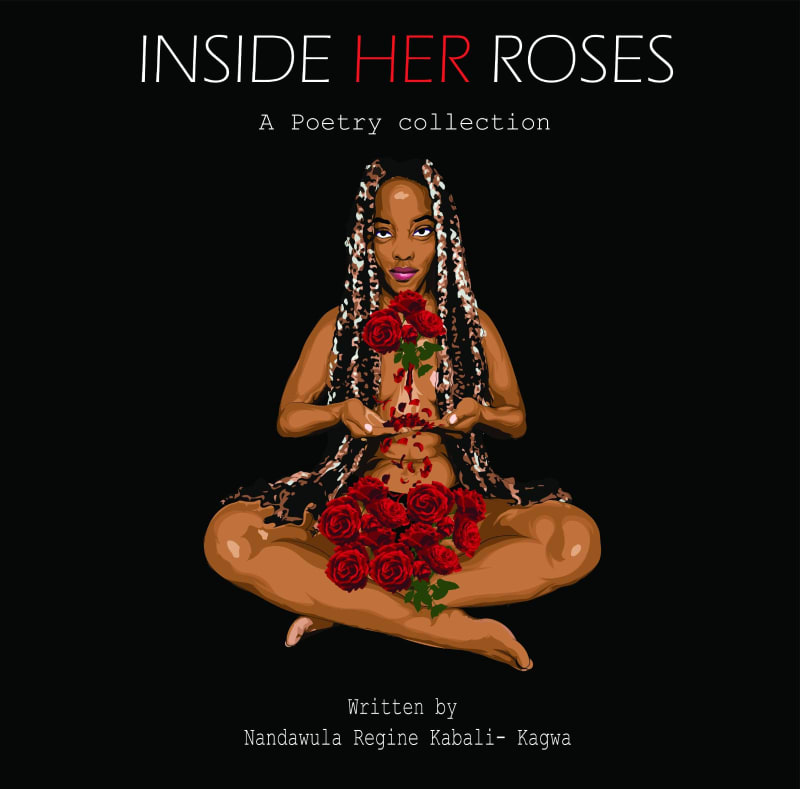
It began with a notebook.
Before the apps and the stages, there was a girl in KuGompo City who wrote things down. In 2021 she gathered the truest of them into a debut collection, Inside Her Roses, poems on womanhood, longing, healing, and the quiet ferocity of becoming.
The book gave her a name to introduce herself by. It is still the centre of everything: the rose she keeps returning to, the softness she refuses to apologise for.
Read the collection →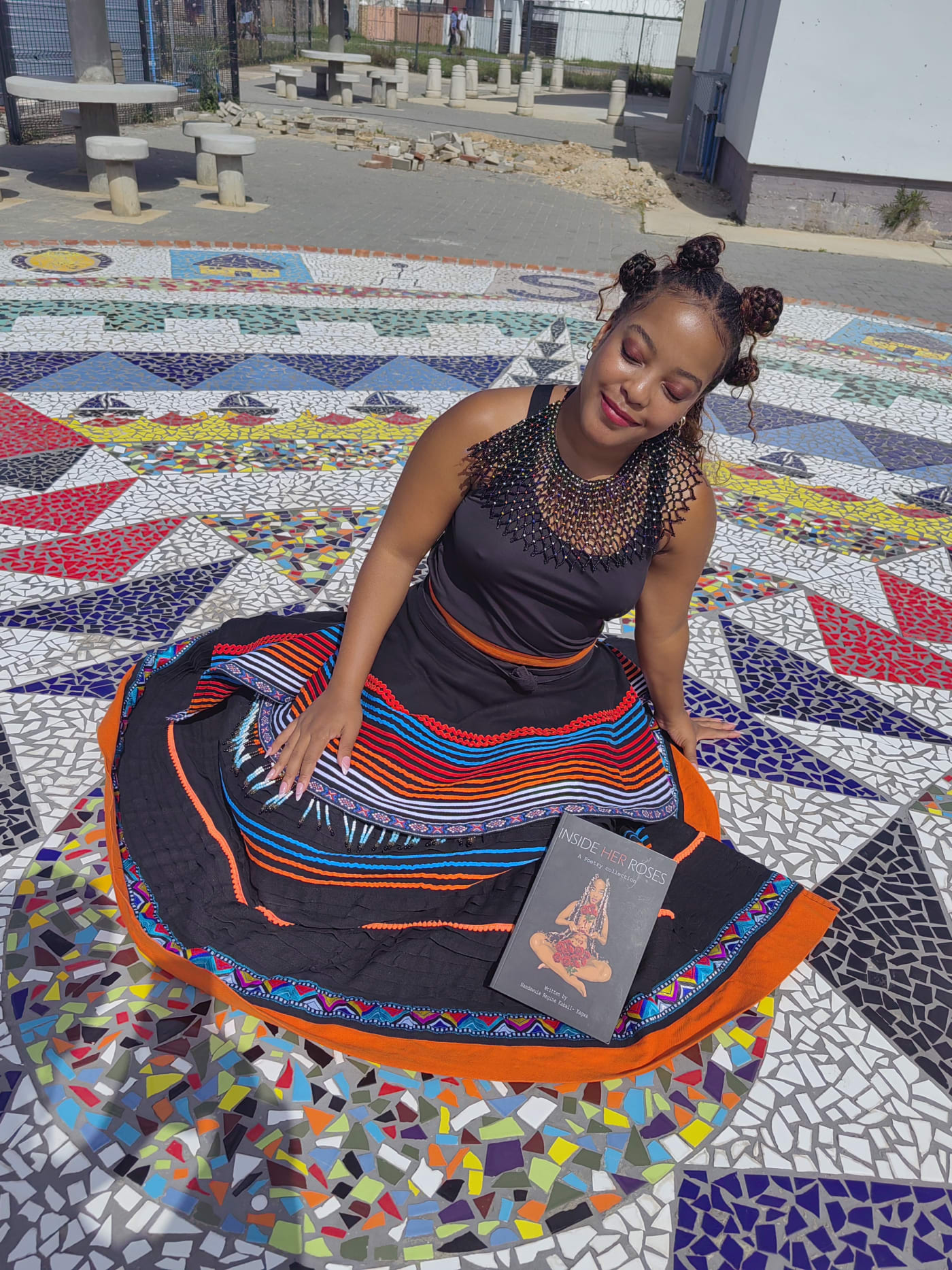
Then the poem stood up and spoke.
Poetry, for her, was never only ink. It put on beadwork and found a microphone: spoken-word nights, the Mandela Bay Arts Festival, five live performances across the Eastern Cape.
On stage the two halves of her meet: the writer and the performer, the tradition and the woman living inside it. She doesn't recite her culture. She wears it, and moves.
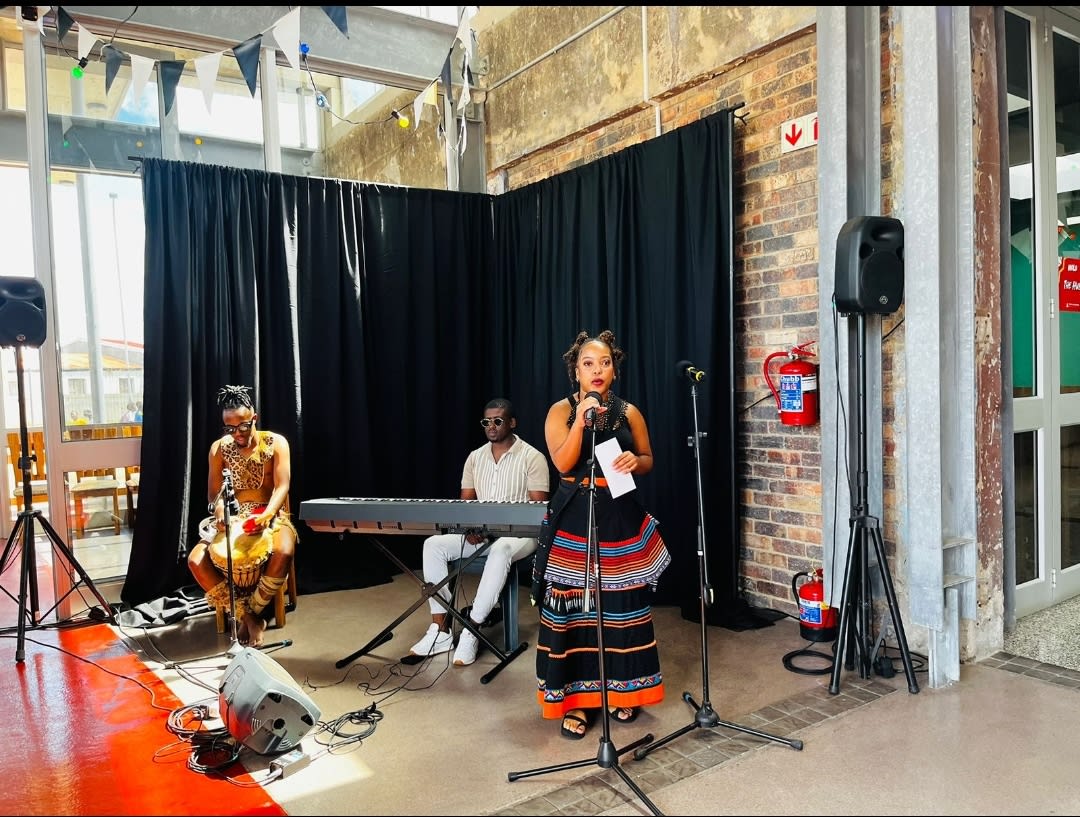
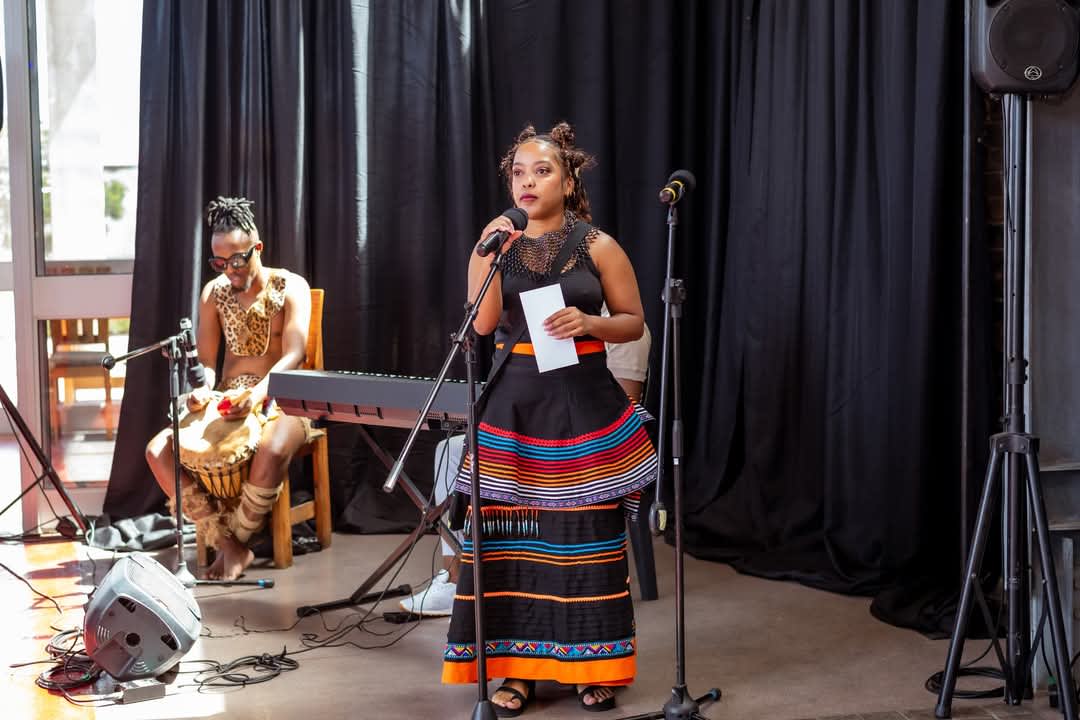
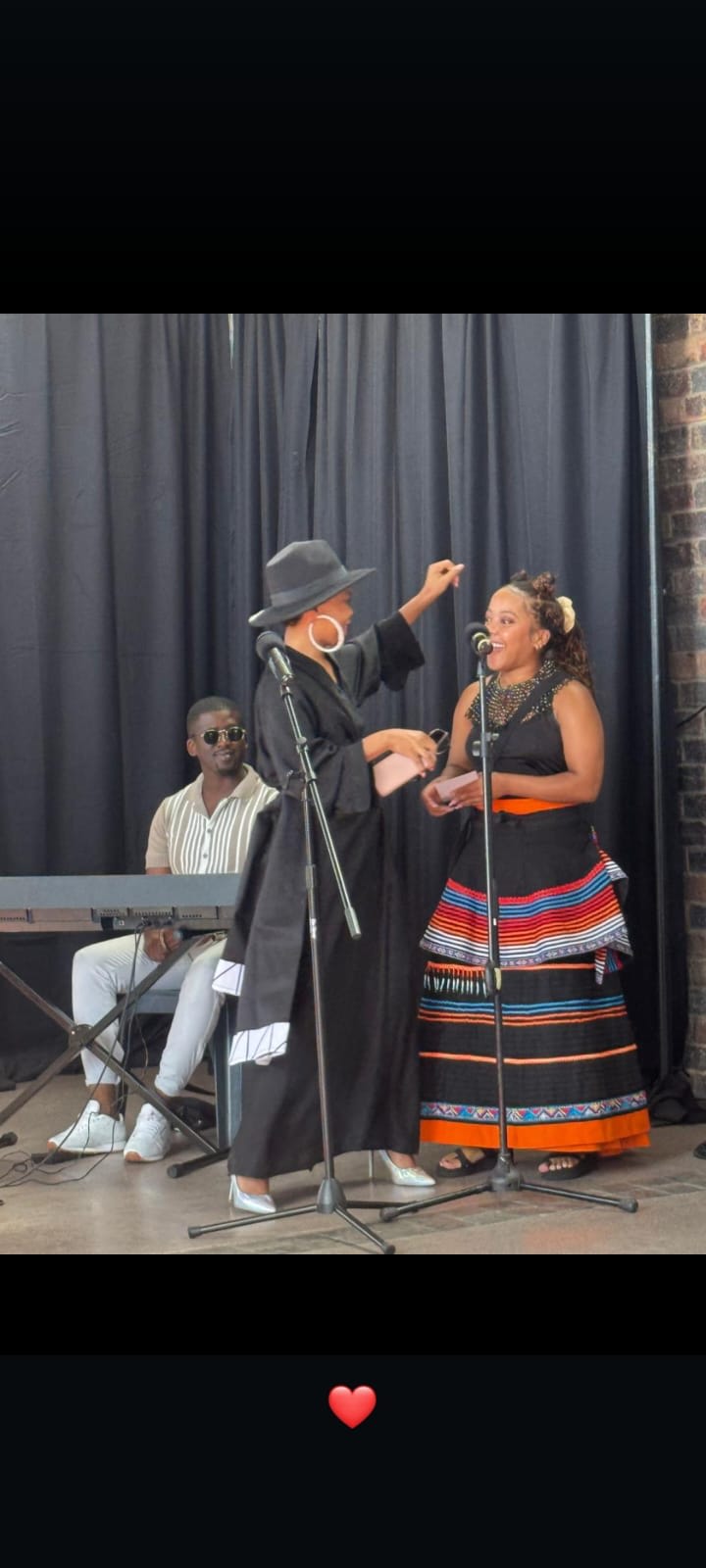
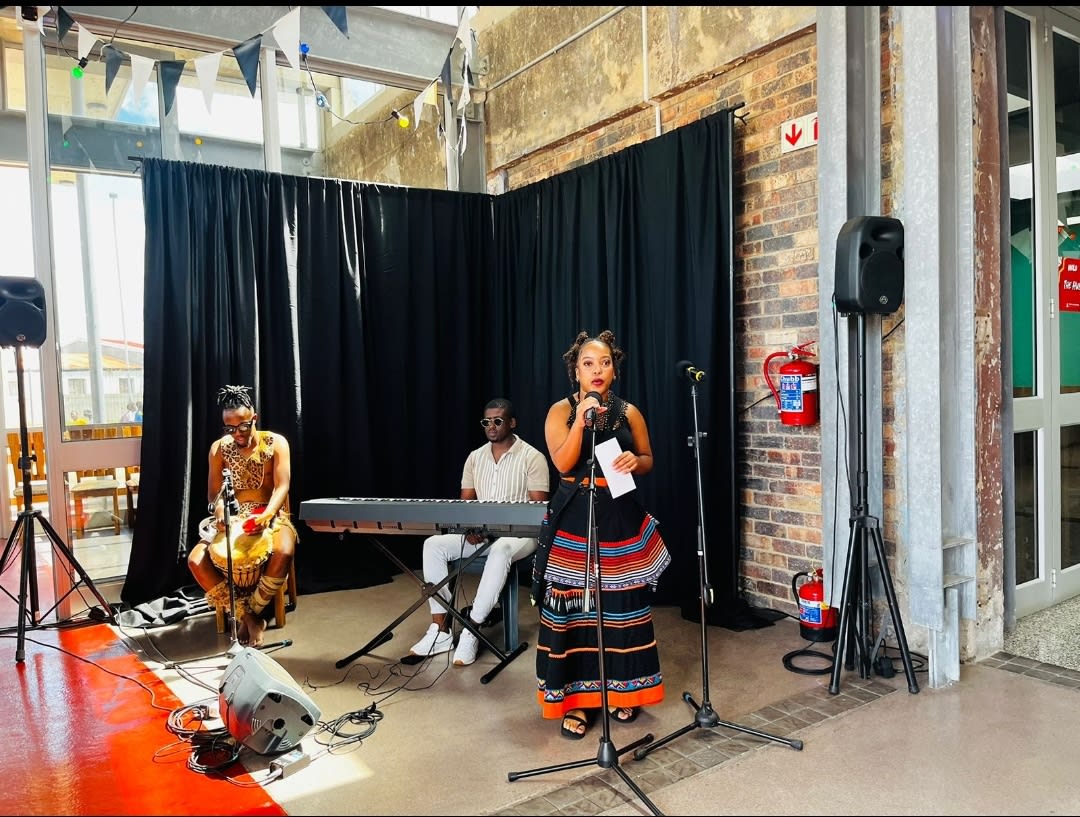
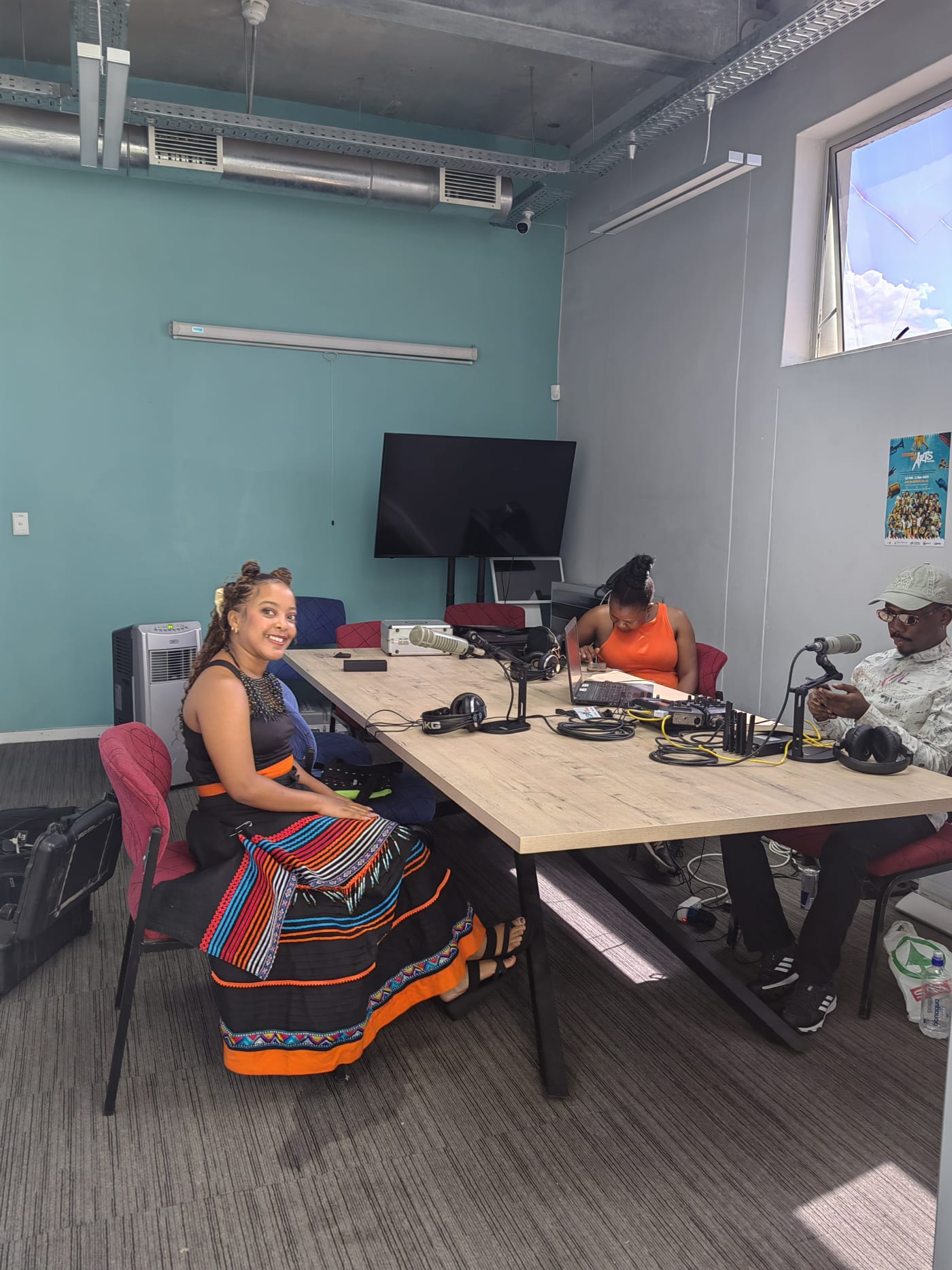
Two stations. One voice, carried.
Twice she has been asked into a room full of microphones and left there: TRU FM in the morning with the beadwork still on, and Madibaz Radio at the desk with the faders up, Connect. Inform. Engage.
There is a particular vertigo the first time a stranger says your name on air. The poems leave the house without you. You find out they were never only yours.
See both studios →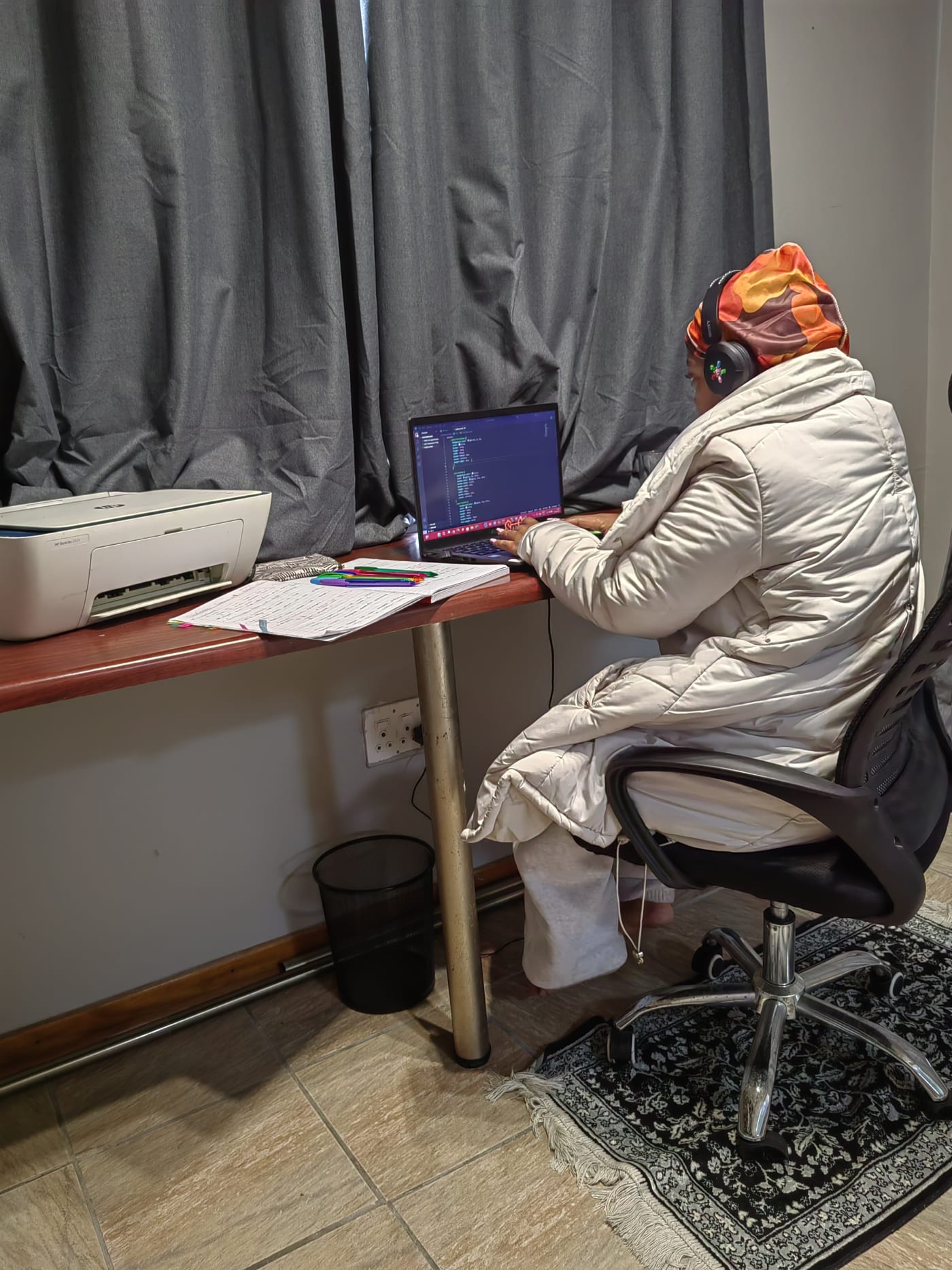
She taught herself a second language.
Somewhere between the stages, she opened a laptop and refused to close it until it made sense. No bootcamp, no shortcut, a home desk, a rainbow of errors, and a stubbornness inherited from a clan whose motto calls its people the pillar and the support-beam.
What came out was a company, Mirembe Muse, and, inside a single year, eight production systems: AI tools, apps, real software for the continent, with paying clients to prove it. The poet had become an engineer without ever ceasing to be a poet.
Three nations gave her their names.
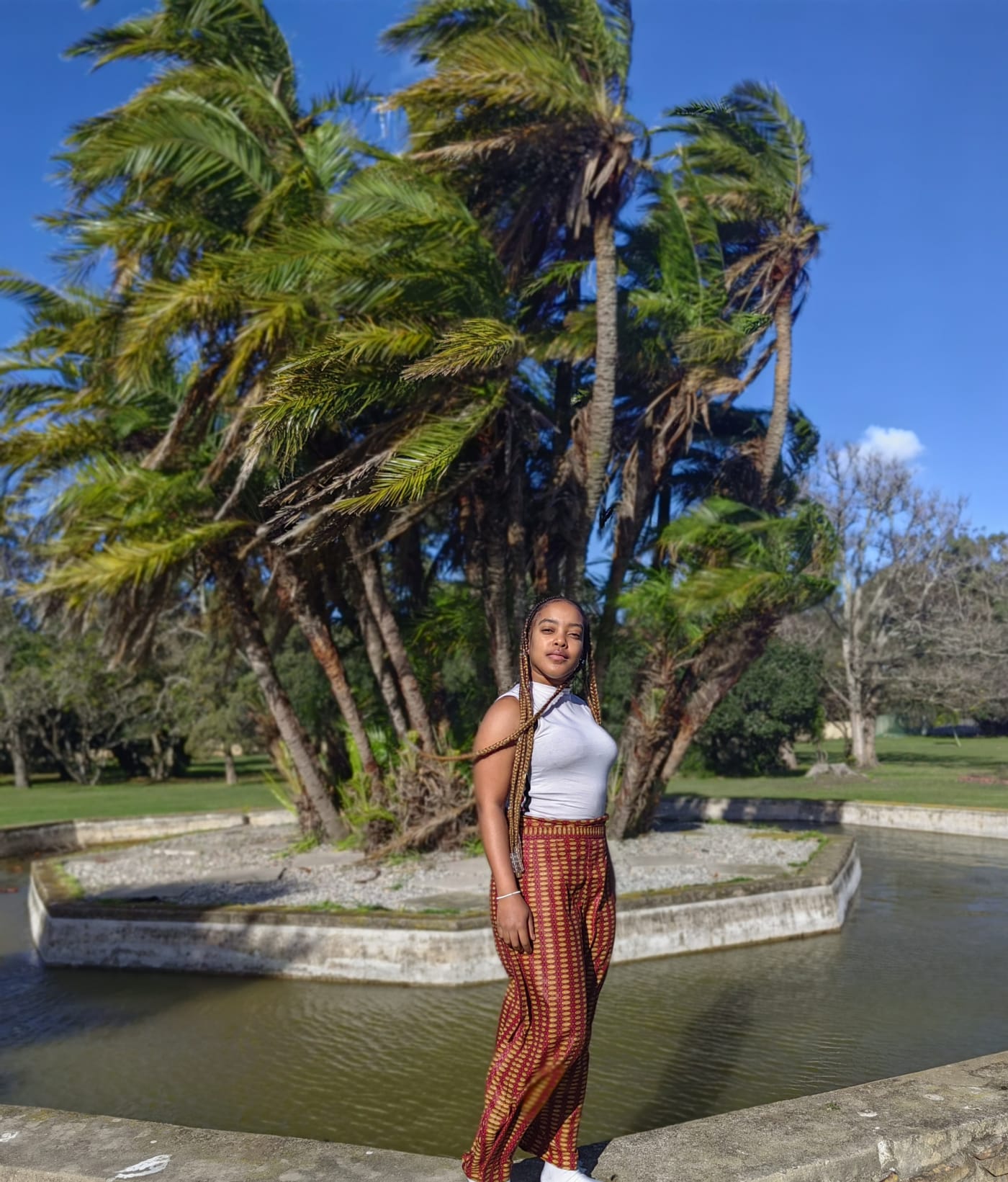
Ugandan father, Xhosa-Sotho mother, five ancestral clans, Nsenene, Hlubi, Msimanga, Thabizolo, Tshawe. Each one handed down a principle rather than an heirloom: lead through people, adapt and endure, heal at the root, build foundations that hold, share what you make.
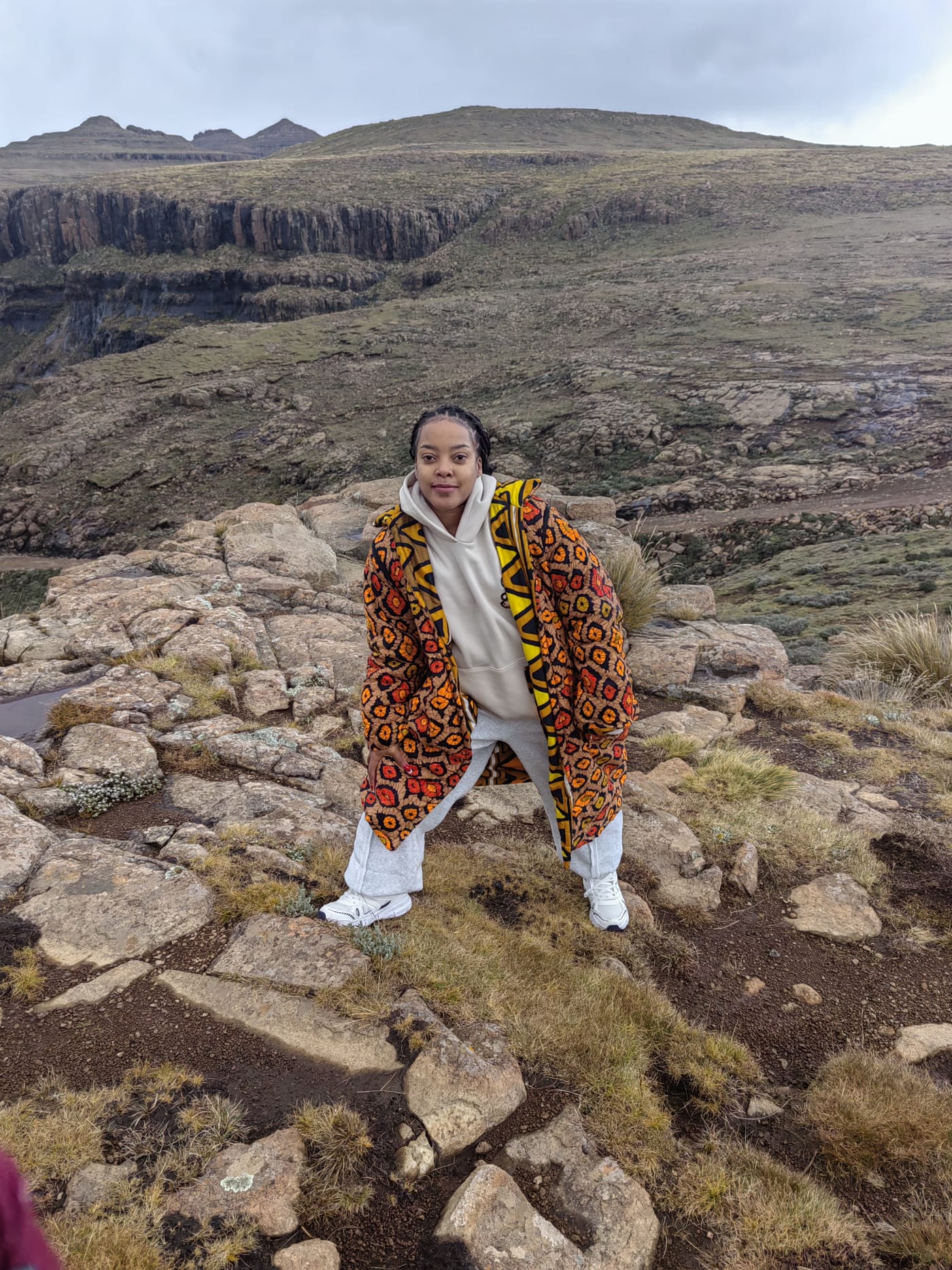
She has brewed the beer in the clay pot. She has stood at the top of Sani Pass in a Basotho blanket with the whole country underneath her. These are not costumes she visits on a Sunday: they are the operating system underneath everything else on this website.
Nine generations, traced →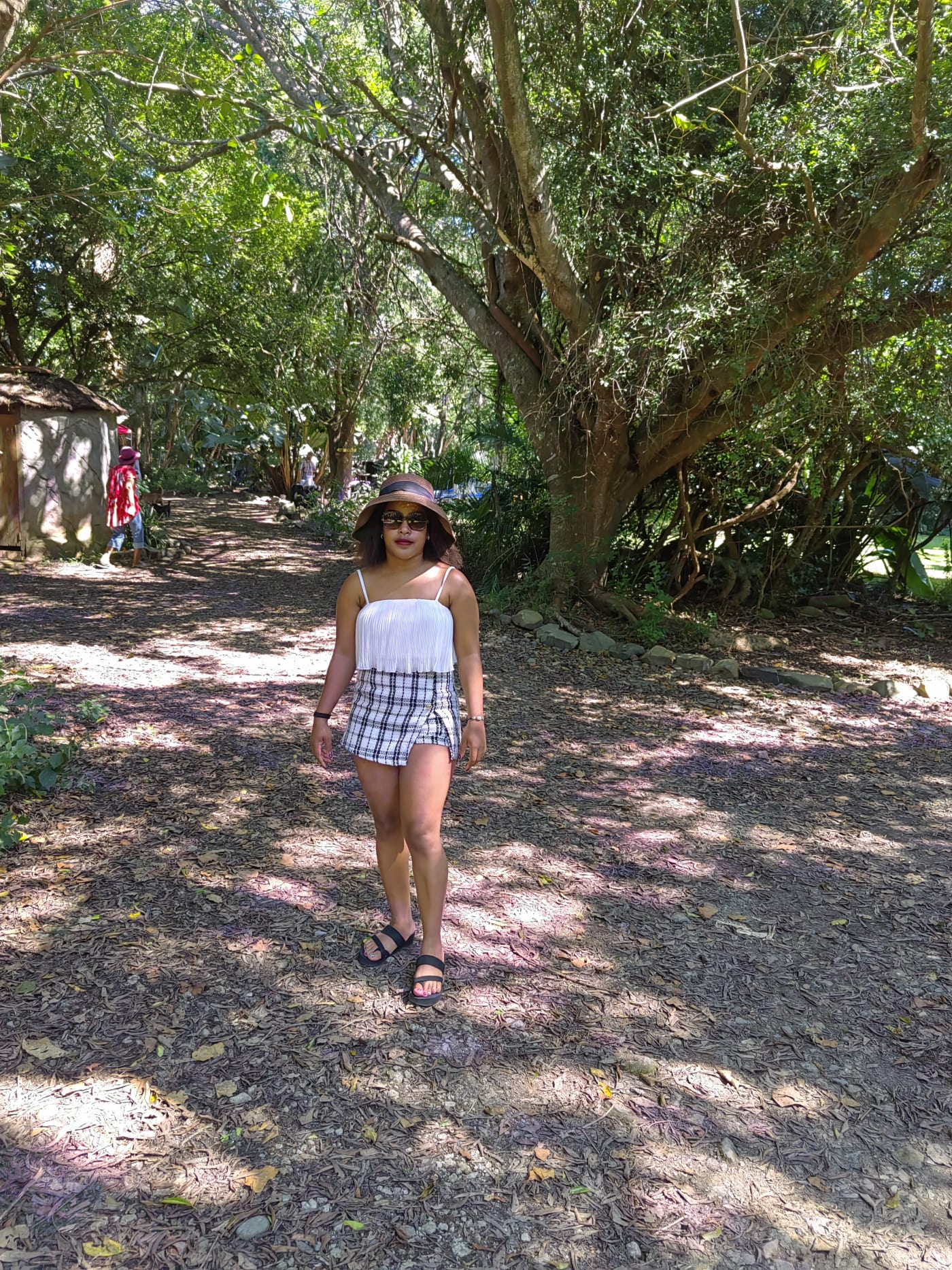
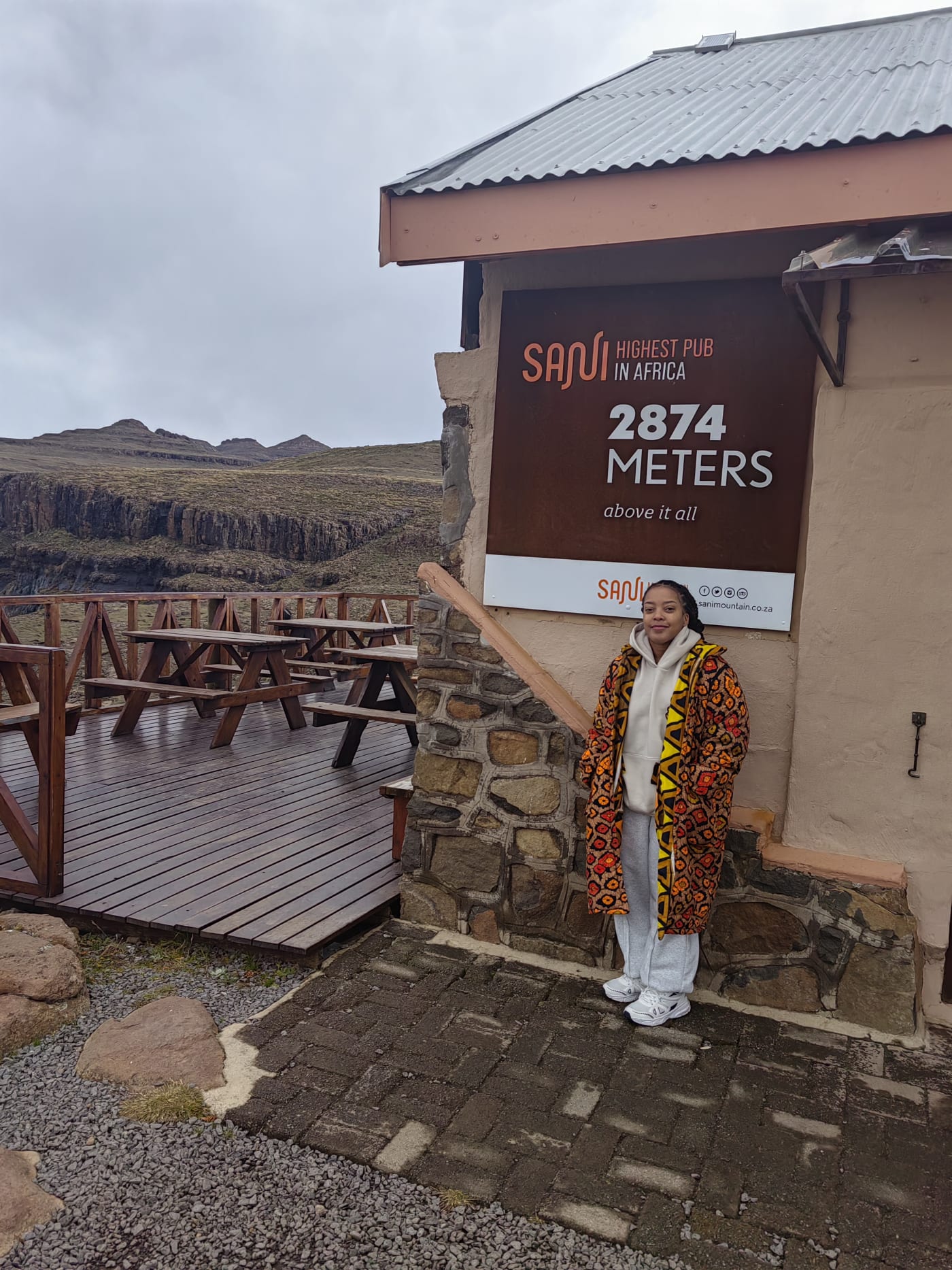
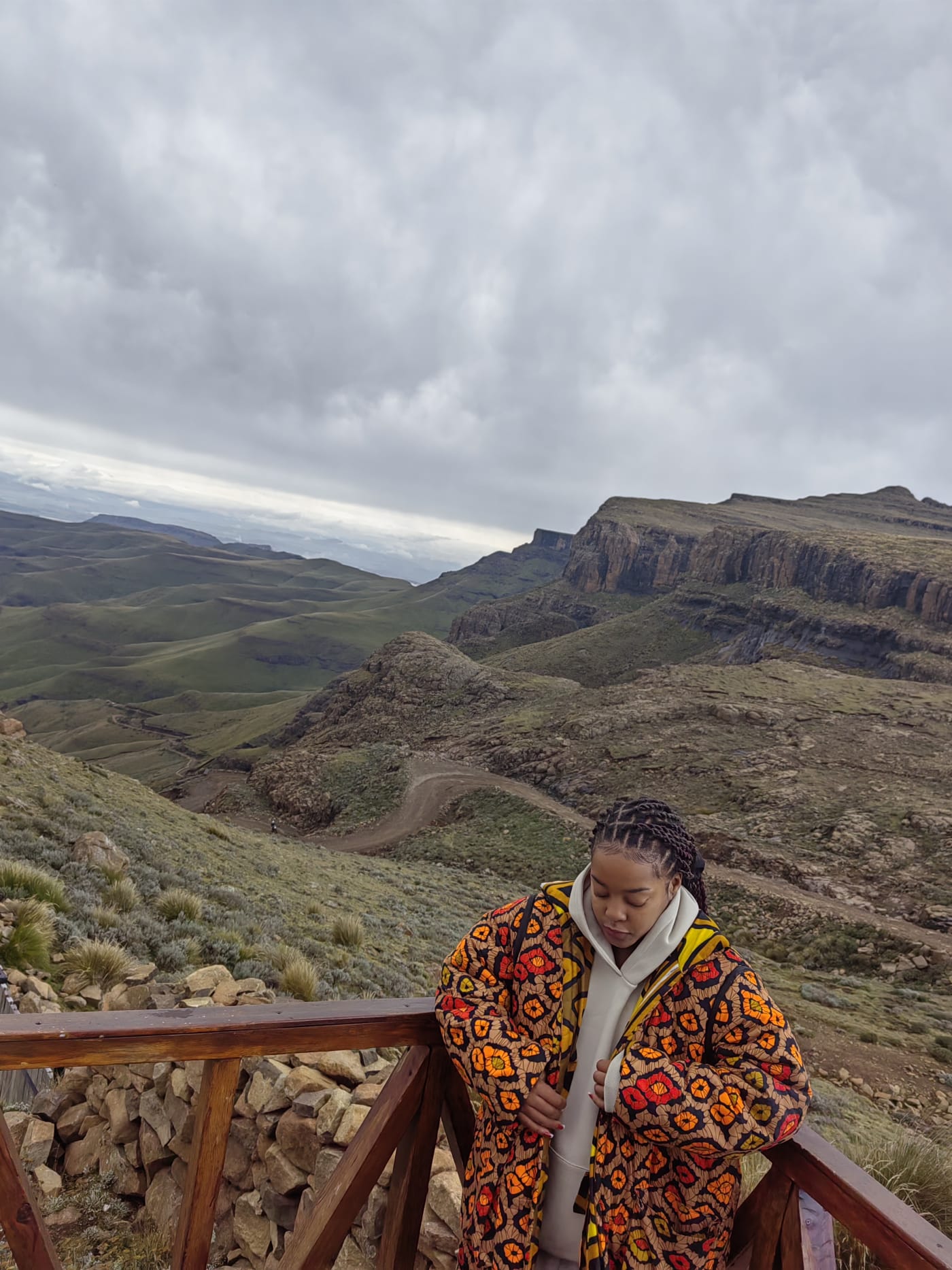
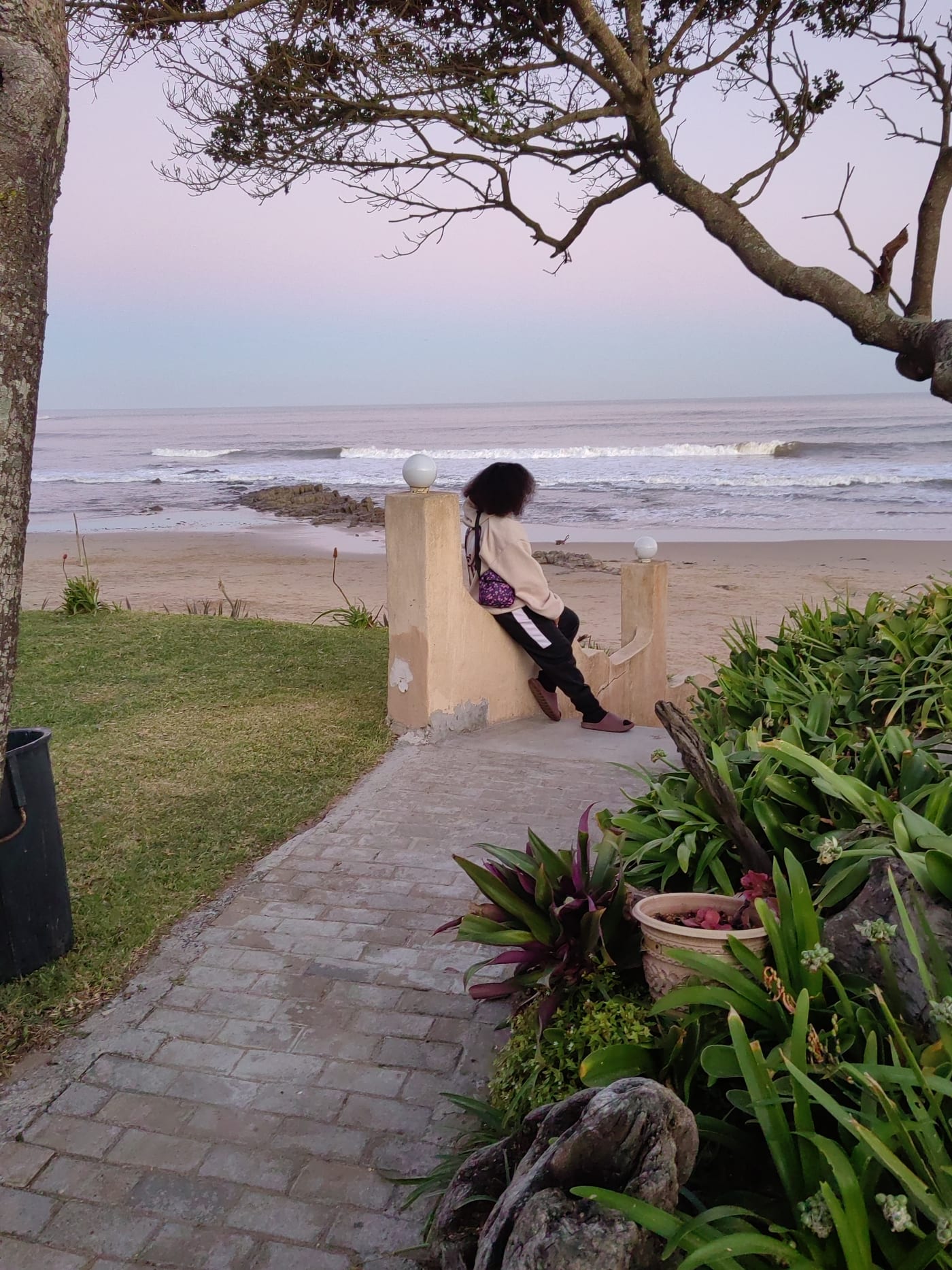
And beneath all of it, a woman.
Away from the gowns and the syntax, she is someone who turns her back to the camera to face the sea; who tends roses and gardens and the people she loves; who cradles a puppy by a rural hearth and laughs at a table crowded with family.
Three nations gave her their names and their poetry. She is the one they appointed to remember, and she remembers in verse, in colour, in code.
What an incredible journey you chronicled here, a fascinating footprint from girlhood into womanhood.