MonFound
She searches the name
Someone hears about Sanyu and searches for it. The products come up on Amazon.co.za, and the brand's own shop is one click away.
Live screen
sanyubotanicals.co.za

The App Studio / Case file / Live as of Nov 2026
Heritage botanical hair care for textured hair, hand-made in KuGompo City, sold through a shop that cannot sell the same jar twice.


Whose it is
Sanyu Botanicals is the founder's own brand, not a client project. It is where every lesson from building for clients gets tested with real stock and real customers.
Sanyu means joy in Luganda, the language of the Buganda Kingdom in Uganda. The brand is women-owned and made by hand in KuGompo City, Eastern Cape.

The product
A cold-pressed Signature Oil, a Hair Growth Balm in two sizes, and sets that put them together.
The ritual is two minutes and three movements: warm, feed, seal. It is on the page because the method is part of the product.
The science
Black cumin is thymoquinone. Castor is ricinoleic acid. Rosemary is rosmarinic acid. Fenugreek is diosgenin. Chebe, from the Sara women of Chad, coats the hair to hold its length.
Each ingredient card says what it does in one plain line, and the library behind it cites the studies instead of making claims.

Honest scarcity
Batches are small, so stock is real. The shop shows live counts and never fakes urgency.
Underneath, the database reserves, commits and releases stock itself, so two people cannot buy the last jar at the same time.

After the sale
Inside each order is an Angel Card with a QR code that opens a private portal: botanical intelligence, a journal and a tier system called the Ascent.
There is a wash-day planner and a length tracker so progress can be seen over time, and an AI hair coach that gives daily tips.

Proof
The numbers carry a source and a date. The screens are the live shop.
The founder tells it herself, with captions on screen. Clips load only when you tap, and you can listen instead of watching.

In her own words: why she made Sanyu
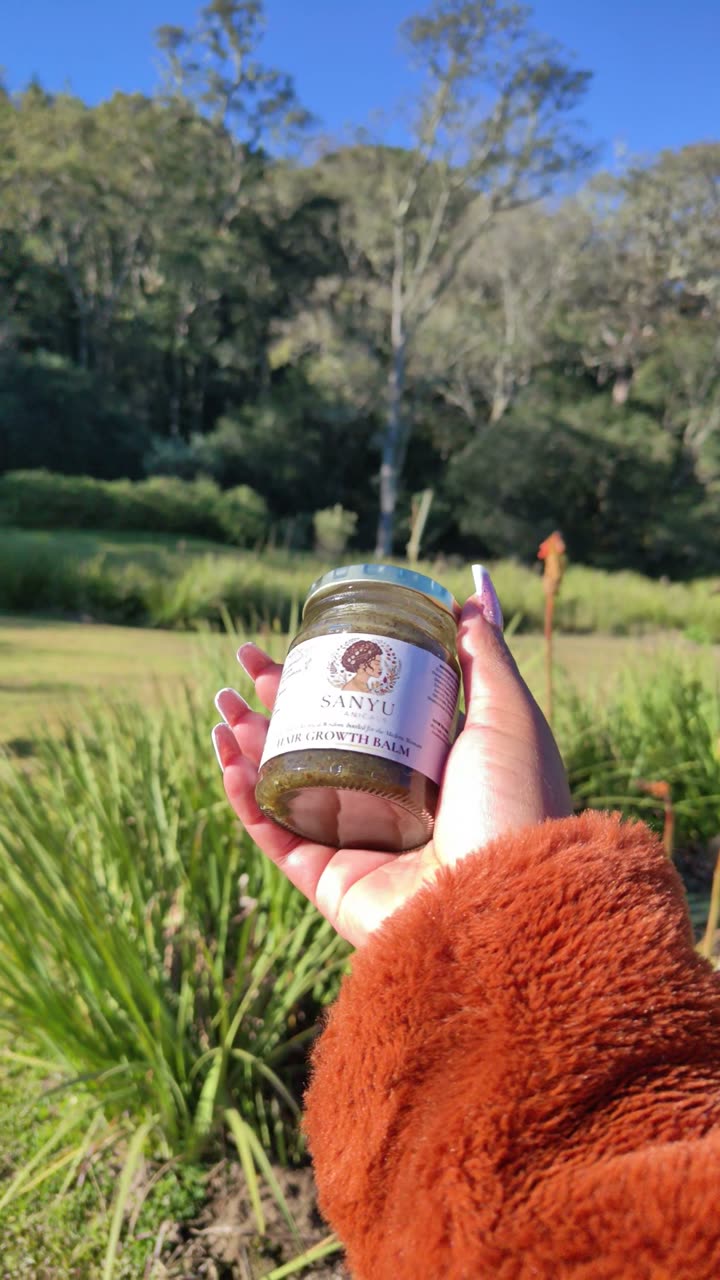
The Sanyu balm, a short loop
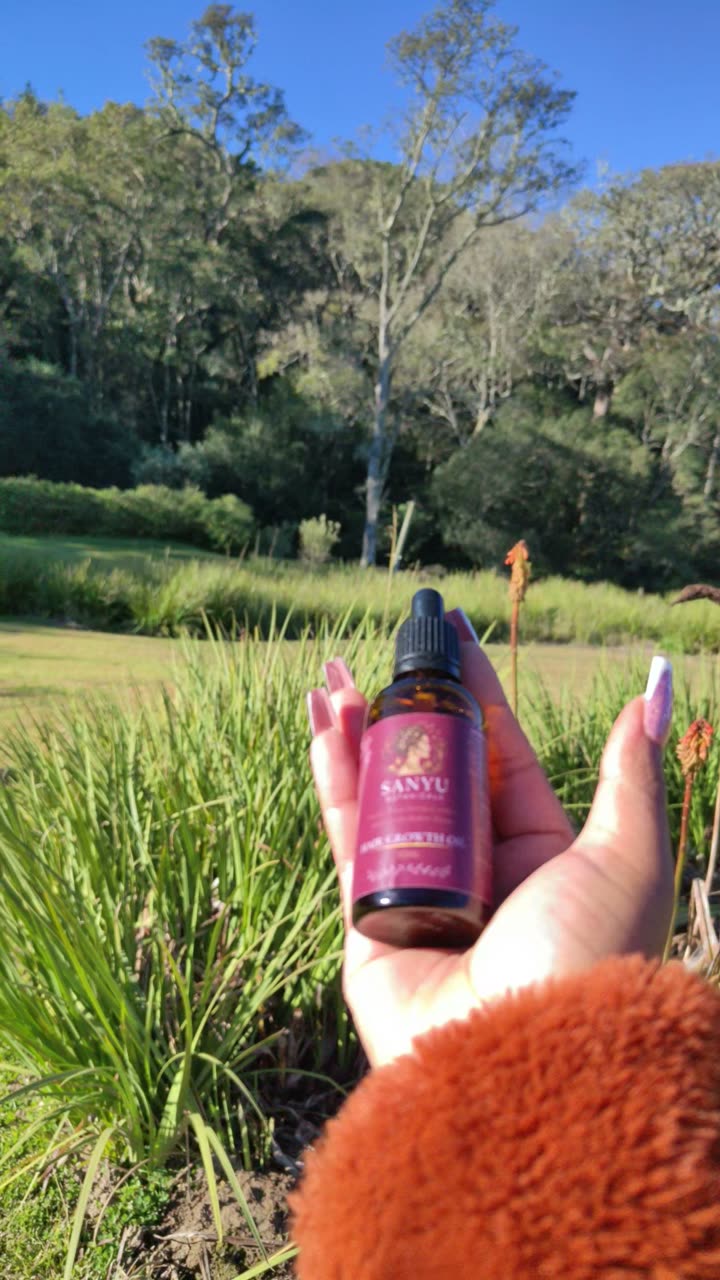
The Sanyu oil, a short loop
Someone hears about Sanyu and searches for it. The products come up on Amazon.co.za, and the brand's own shop is one click away.
Live screen
The ingredients page shows each botanical, what it does and the compound behind it. A customer with textured hair has been sold vague promises before, and this answers her.
Live screen
The Ritual Duo, the Luxury Set or the Balm Pair, side by side, with stock status shown honestly.
Live screen
The product page shows what is in the set and how many jars are left in the batch. The number comes from the same stock the till uses.
Live screen
Her order arrives with an Angel Card. She scans it, opens her private portal, and starts the journal and the length tracker.
Live screen
Choose a part to see what it does, why it is there and what it cost.
Nothing selected yet.
Alternatives
Why
The making is the difference. Hand-made in small batches is only believable if you can see it.
Cost Every image has to be shot, and the shoot never ends.
Receipt: Product truth file, content rules, Aug 2026
Alternatives
Why
Small batches make scarcity real. Real scarcity needs no tricks, and tricks would spend the trust the brand is built on.
Cost A sold-out page loses the sale until the next batch is made.
Receipt: Product truth file, content rules, Aug 2026
Alternatives
Why
A database procedure is the one place every request passes through, so overselling is ruled out by construction.
Cost More SQL to write and migrate, and a harder thing to change quickly.
Receipt: Product truth file, Sanyu evidence, Aug 2026
Alternatives
Why
Customers with textured hair have heard the promises before. Naming the compound, and citing the study, is answerable.
Cost Every claim needs a source, so some nice sentences were cut.
Receipt: Product truth file, active ingredients, Aug 2026